
We need to settle a question that has been unresolved since Long Covid was first described. Does the brain fog of Long COVID resolve on its own? The best 36-month data says no.
A 36-month follow-up study of 214 hospitalized COVID-19 survivors (Maziero 2026) tracked cognition carefully across three years and found four distinct patterns.
About 48% of survivors stayed cognitively normal throughout. Fourteen percent recovered — they started out impaired and returned to normal by three years. Thirty-two percent were persistently impaired across every cognitive test at every time point.
And a fourth group, about 7%, was the finding that changed the conversation. These patients looked cognitively normal in the first year after infection. Then they transitioned into impairment later.
That late-decliner group is the one that matters most. It tells us the mechanism driving Long COVID brain fog is not something that heals over time. It is something that progresses, and in a subset of people, it gets worse years after the acute infection clears. “I felt fine in 2023” is not evidence that someone will feel fine in 2027.
The Inflammation Picture
Several supporting studies filled in the mechanism.
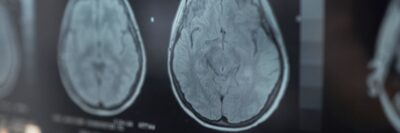
Schwichtenberg and colleagues (Schwichtenberg 2026) showed persistent structural changes on brain MRIs in Long COVID patients. Ray and colleagues (Ray 2026) identified a distinct pattern of immune cell gene expression that defines people with enduring Long COVID. Together, these papers point to chronic neuroinflammation (chronic inflammation inside the brain) rather than residual damage from the original infection. The immune system, in a subset of patients, never stood down.
Then Abdullah and colleagues put a molecular face on the inflammation (Abdullah 2026). They measured immune signaling molecules in 90 Long COVID patients. Three signals — IL-6, IL-10, and substance P — were significantly elevated compared to healthy controls, in both symptomatic and asymptomatic Long COVID patients.
That asymptomatic detail matters. Inflammation in the brain can be present even in people who feel fine. Which is exactly what you’d expect if you were trying to explain the 7% late-decliner group. The biology may already be there, with symptoms lagging behind.
Substance P signals through a receptor called NK1R, which is already a known player in chronic inflammation, pain, and post-infectious syndromes. There’s already an FDA-approved drug that blocks this receptor (aprepitant, used for chemotherapy-induced nausea). The Abdullah paper showed, using computer modeling, that aprepitant binds the Long COVID-relevant version of this receptor well.
We want to be careful here. This is early-stage evidence: computer modeling plus observational immune-signal data. No in-person clinical outcome trials for Long COVID brain fog yet. Aprepitant is not a prescription for Long COVID cognitive symptoms today, and we’re not recommending anyone treat it as one. The inflammation finding is the firmer piece, and the therapeutic lead is a thread to watch. Elevated IL-6 and substance P in Long COVID patients who feel fine means absence of symptoms does not mean absence of inflammation. That has practical implications for how we work up cognitive symptoms after COVID.
The NIH’s 2024 deep-phenotyping study of post-infectious ME/CFS found differences across brain, immune, autonomic, and metabolic systems (Walitt 2024). That does not mean ME/CFS and Long COVID are the same condition. It means the same post-infectious pattern keeps showing up: immune activation, autonomic dysfunction, abnormal energy handling, and brain-level changes that can outlast the original infection.
What this means for you
If you or a family member had COVID — especially a serious case — and cognitive symptoms followed, the right next steps are:
- A thorough cognitive baseline, ideally within the first six months.
- Inflammation markers in the blood (hsCRP, IL-6, VEGF, MMP-9, TGF-Beta, C4a if available), along with the newer brain-inflammation markers GFAP and NfL if your clinician has access to them.
- An assessment of autonomic nervous system function including a lean test, which often co-occurs with Long COVID brain fog.
- An assessment of brain function such as a QEEG.
- A follow-up plan at six months, regardless of how you feel at the first visit.
If you are in the 7% late-decliner group biologically — feeling fine at one year but with underlying inflammation — the only way to catch it is the follow-up. Feeling fine at 12 months does not close the case, especially if you have APOE ε4, a family history of dementia, or any baseline cognitive concern.
What this means at Rezilir
Every patient with cognitive symptoms after COVID is worked up as a chronic-neuroinflammation case, not as a “recovery” case. The panel we run has gotten broader. The follow-up schedule runs regardless of how the patient feels at visit one.
The same kind of inflammation that shows up in post-COVID brain fog shows up in chronic mold illness, post-Lyme syndrome, mast cell activation syndrome, and chronic fatigue syndrome (ME/CFS). Different triggers can produce similar downstream biology and similar clinical patterns. The treatments that work on the underlying inflammation — mitochondrial support, targeted antimicrobials where infection is part of the picture, detox support, sleep repair, aggressive treatment of co-existing metabolic disease — start looking like a shared toolkit across all these conditions, not five separate protocols that happen to look alike.
References — Part 4
- Maziero MP, Lee EA, Colpo GD, Couture L, Merrill LC, Baskin L, Cahuiche AE, Petway A, Fan H, Reese E, Anderson KM, McCullough LD, Schulz PE, Ortiz GJ. Cognitive Trajectories After Hospitalization for COVID-19: A 36-Month Longitudinal Study. The Journal of Neuropsychiatry and Clinical Neurosciences. 2026. doi: 10.1176/appi.neuropsych.20250267
- Schwichtenberg K, Hartung T, Heine J, Krohn S, Boesl F, Rust R, Romanello A, Paul F, et al. Association of structural brain changes with cognitive deficits and fatigue in patients with post-COVID-19 condition. Brain Communications. 2026;8(2):fcag099. doi: 10.1093/braincomms/fcag099
- Ray U, Schulze Selting A, Perera RP, Yang Z, Lysenkov V, Göpel S, Bitzer M, Salker MS, et al. Dysregulated NK-cell gene expression defines the enduring symptoms of long COVID-19. Frontiers in Immunology. 2026;17:1720551. doi: 10.3389/fimmu.2026.1720551
- Abdullah M, Naz A, Reznikov LR, Qureshi JA, Hasnain A, Obaid A, Ali A. Neuropeptide and cytokines expression in long COVID-19 related neuropsychological sequelae: insights into NK1R-mediated neuroinflammation and in silico therapeutic targeting. Frontiers in Cellular Neuroscience. 2026;20:1763029. doi: 10.3389/fncel.2026.1763029
- Walitt B, Singh K, LaMunion SR, Hallett M, Nath A, et al. Deep phenotyping of post-infectious myalgic encephalomyelitis/chronic fatigue syndrome. Nature Communications. 2024;15:907. doi: 10.1038/s41467-024-45107-3