

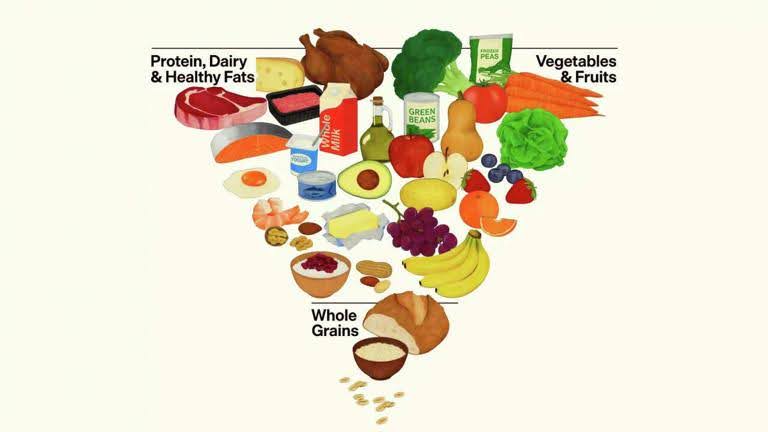
Upside Down is Right Side Up
A new food pyramid has been announced by the USDA. This is an exciting development given that nutritional science has changed since the last USDA pyramid. The USDA food pyramid was first introduced in 1992. It was designed to provide nutritional guidance by categorizing foods into a pyramid structure to promote what was considered healthy eating habits at the time.
Structure of the Original Food Pyramid (pictured below)
The 1992 Food Pyramid promoted:
- 6–11 servings of grains per day as the foundation of the diet
- A strong emphasis on low-fat and fat-free foods
- Limited differentiation between whole and refined grains
- Broad discouragement of fats
- Proteins grouped together regardless of source
- Grains: At the base of the pyramid, grains (bread, cereal, rice, and pasta) were recommended in large quantities.
- Fruits and Vegetables: The next level included fruits and vegetables, with only a slight emphasis on vegetables
- Dairy: The third level featured dairy products, such as milk, yogurt, and cheese. These were recommended for calcium and other nutrients.
- Protein: The fourth level included protein sources like meat, poultry, fish, beans, and nuts, suggesting these should be consumed in moderation.
- Fats and Sweets: At the top of the pyramid, fats, oils, and sweets were to be used sparingly, indicating that these should be limited in the diet. Fats and oils were considered unhealthy at this time due to poorly designed research studies and false data.
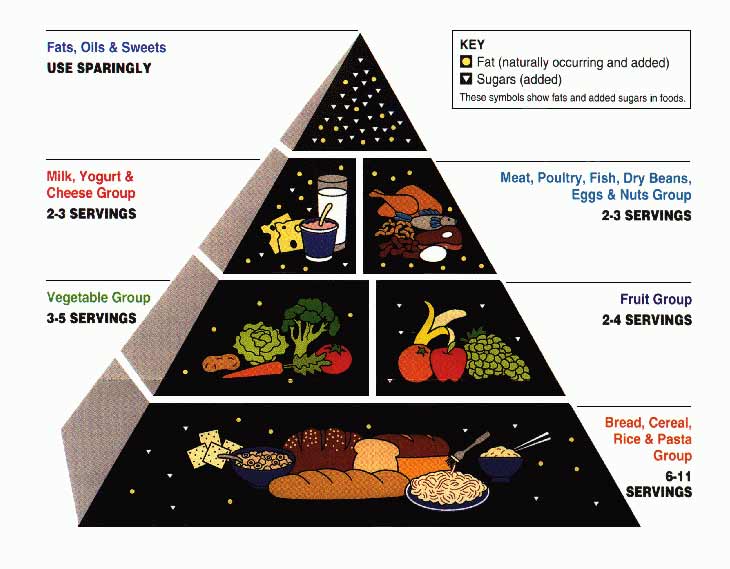
USDA Food Pyramid 1992
Why the Food Pyramid Was Redesigned
The Food Pyramid was based on old science that has since been debunked. It emphasized a low fat, high carbohydrate meal pattern. As scientific methods improved and long-term data accumulated, we learned that this is not the case. Instead, advances in nutrition research found the following:
- High refined carbohydrate intake worsens metabolic health. Refined carbohydrates include anything made with flour, snacks made with processed grains like wheat, rice or corn, and refined sugars.
- Low-fat advice unintentionally increased sugar consumption. When you omit the fat from foods, it tends to be replaced with more carbohydrates which tend to be over consumed causing metabolic issues.
- Food processing level strongly influences disease risk. The food pyramid did not distinguish between whole foods and processed foods which are metabolized very differently in the body.
- Dietary patterns predict health outcomes better than single nutrients. Esting a more balanced whole foods diet that includes healthy fats was never emphasized. Modern guidance reflects this more nuanced understanding.
The shift from the Food Pyramid to current dietary guidance represents progress in nutrition science, not contradiction. Today’s recommendations emphasize:
- Whole, minimally processed foods.
- Adequate protein intake. New research on protein suggests higher needs for the elderly, men and women although the RDA has not changed.
- The importance of healthy fats for optimal health. An important shift from the nutrition recommendations during the “low fat era” where fat was demonized.
- High-fiber carbohydrates instead of processed or low fiber sources. Not all carbs are equal, the nutrition in an apple is different than that in apple juice which is processed and usually contains added sugars. Carbohydrate portions have also been reduced. Originally, the Food Pyramid recommended 6-11 portions were recommended to meet 55% or more of your caloric needs. This emphasis on carbohydrates and sugar with avoidance of healthy fats is thought to have been one of the reasons the rate of obesity and chronic illness rose over the past few decades.
- Sustainable dietary patterns rather than rigid rules allow for people to enjoy life instead of having very restrictive diets that are hard to continue long term.
The pyramid remains an important historical teaching tool, but modern science demands a more sophisticated approach to human nutrition.
The 2026 Food Pyramid also supports brain health. Eating whole, unprocessed food provides more vitamins, minerals, antioxidants, healthy fats, fiber and medicinal phytochemicals. Structuring your diet this way also supports a healthy metabolism which is crucial for brain function and to help energize the brain. I have been teaching my patients to eat in a similar pattern as the 2026 Food Pyramid for years and was happy to see the USDA recommendations catch up to the new science. Check out the new dietary guidelines for Americans at Eat Real Food https://realfood.gov.
How to Identify Whole Foods
Choose foods as close to their natural form as possible
Rule: If it looks like something that came from a plant or animal, you’re on the right track.
- Whole foods are minimally processed and retain their natural structure, fiber, and micronutrients
- Examples: fresh vegetables, whole fruits, eggs, beans, fish, whole grains
- Limit foods that are heavily refined, reconstituted, or engineered
Why it matters: Less processing preserves fiber, vitamins, minerals, and beneficial phytochemicals while avoiding excess sodium, sugars, and additives.
Prioritize fiber-containing foods
Rule: Most of your carbohydrates should naturally contain fiber.
- Vegetables, fruits, legumes, nuts, seeds, and whole grains all contain fiber
- Avoid carbohydrates that have been stripped of fiber (white flour products, sugary drinks)
Why it matters: Fiber supports gut health, blood sugar control, cholesterol metabolism, and immune function.
Let ingredients guide your choices
Rule: The shorter and more recognizable the ingredient list is, the better.
- Ideally: one ingredient (e.g., “lentils,” “olive oil”)
- If packaged, ingredients should be recognizable food components, not chemical additives that sound like you learn in a chemistry class.
Why it matters: Long ingredient lists often signal ultra-processing, which is associated with higher cardiometabolic risk.
Choose quality protein sources
Rule: Get protein from whole-food sources rather than protein isolates whenever possible.
- Examples: eggs, fish, poultry, beans, lentils, tofu, yogurt, nuts
- Rotate plant and animal proteins for nutrient diversity
Why it matters: Whole protein foods provide not just amino acids, but also iron, zinc, B vitamins, omega-3s, and other cofactors important for metabolism and immunity.
Choose fats that are in whole foods.
- Examples: olive oil, avocados, nuts, seeds, fatty fish
- Limit industrial seed oils used in ultra-processed foods and fried items
Why it matters: Fats in whole foods come with antioxidants and bioactive compounds that support heart and metabolic health.
If a food:
- Could be cooked in a home kitchen
- Has been eaten in similar form for generations
- Doesn’t require a factory to create
…it’s probably a good whole-food choice.
References
- Estruch R, et al. Primary prevention of cardiovascular disease with a Mediterranean diet. New England Journal of Medicine. 2018;378: e34.
- Sacks FM, et al. Effects on blood pressure of reduced dietary sodium and the DASH diet. New England Journal of Medicine. 2001;344(1):3–10.
- Aune D, et al. Whole grain consumption and risk of cardiovascular disease, cancer, and mortality. BMJ. 2016;353:i2716.
- Reynolds A, et al. Carbohydrate quality and human health: systematic review and meta-analysis. The Lancet. 2019;393(10170):434–445.
- Liu S, et al. A prospective study of dietary glycemic load, carbohydrate intake, and risk of coronary heart disease. American Journal of Clinical Nutrition. 2000;71(6):1455–1461.
- Siri-Tarino PW, et al. Meta-analysis of saturated fat and cardiovascular disease. American Journal of Clinical Nutrition. 2010;91(3):535–546.
- Mozaffarian D, et al. Effects on coronary heart disease of increasing polyunsaturated fat. PLoS Medicine. 2011;8(3):e1000252.
- Phillips SM, Van Loon LJC. Dietary protein for athletes and active adults. Journal of Applied Physiology. 2011;110(6):1662–1673.
- Leidy HJ, et al. The role of protein in weight loss and maintenance. American Journal of Clinical Nutrition. 2015;101(6):1320S–1329S.
- Monteiro CA, et al. Ultra-processed foods and health outcomes. Public Health Nutrition. 2019;22(5):936–941.
- Srour B, et al. Ultra-processed food intake and risk of cardiovascular disease. BMJ. 2019;365:l1451.
- Hall KD, et al. Ultra-processed diets cause excess calorie intake and weight gain. Cell Metabolism. 2019;30(1):67–77.