
Exercise is the intervention every doctor recommends and most people under-do. The 2026 data cleared up two things that have been fuzzy for years: which type of movement works best, and how hard someone with cognitive concerns can safely train. The answers are more generous than the standard “150 minutes of moderate walking per week” most people have been told.
Dance is not a novelty. It’s a real option.
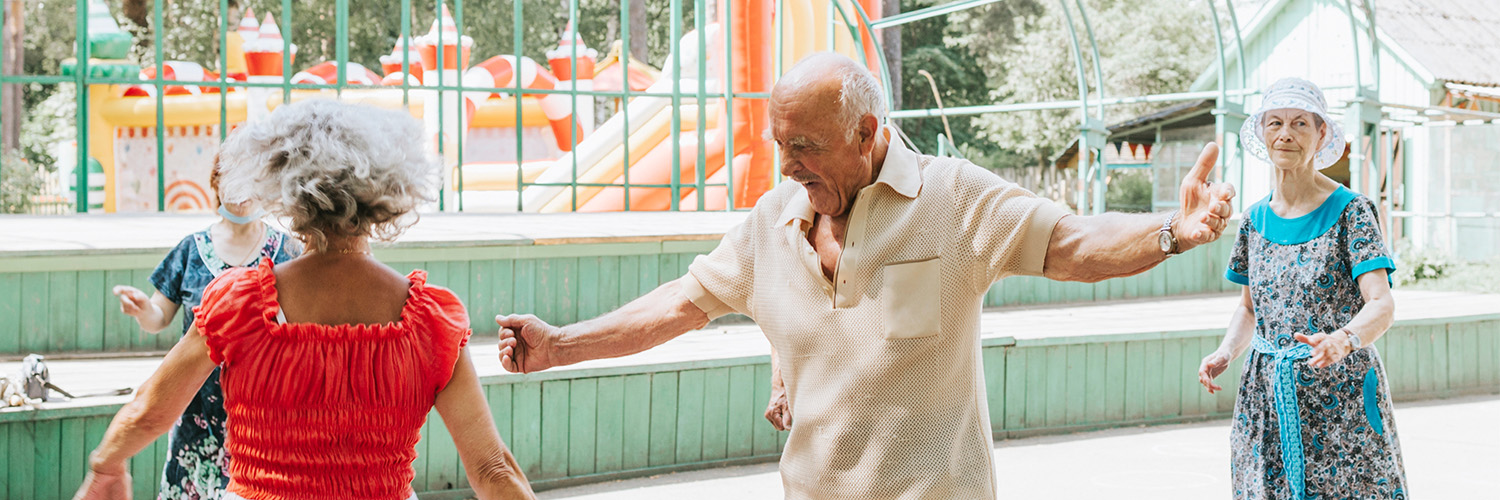
A large analysis of 209 randomized trials in mild cognitive impairment and dementia (Zhao 2026) compared dance against every other exercise style the field has studied: aerobic exercise, strength training, combined programs, tai chi, stretching. Dance came out on top for overall cognition and among the top options for working memory, attention, physical performance, and mood.
Dance wasn’t statistically better than a solid aerobic or strength program, but it was competitive. That is a meaningful statement for a type of movement most neurology clinics have never prescribed.
Why does dance hold up? It layers cardiovascular exertion, fine motor coordination, spatial memory (remembering steps), rhythm-based attention, and social contact onto a single activity. The cognitive-mechanism argument is clear, and the outcome data now catches up to it.
What this means for you. If you hate gyms, if you’re looking for something that combines exercise with social time, or if you’ve lapsed out of previous exercise programs and need something you’ll actually keep doing, dance is now a legitimate prescription. Salsa, line dancing, ballroom, contra dance, Zumba. The best exercise is the one you’ll keep doing, and the best-doing exercise is the one that produces a training effect. Dance can hit both conditions.
Hard exercise is back on the menu
A second paper by Baschirotto and colleagues (Baschirotto 2026) looked at high-intensity exercise training in people with mild cognitive impairment and dementia. The conclusion was that high-intensity training is feasible, not merely tolerable.
The distinction matters because “tolerable” means “patients can get through it,” while “feasible” means “patients can complete a program with good adherence, safety, and a measurable training effect.” The drop rate was only 13% across 21 different studies with high adherence to exercise programs. The old rule — go gentle in anyone with cognitive concerns — came from a reasonable caution about falls and overexertion in a population assumed to be fragile. The 2026 review argues that properly progressed high-intensity work gets done by people who can do it, and the cognitive results favor pushing harder than the traditional default.
“Properly progressed” is the phrase that matters. Before anyone pushes intensity, you want:
- A baseline cardiac risk assessment.
- A real warm-up and a gradual increase in difficulty.
- A program that starts below your threshold and adds load over weeks, not days.
- Supervision in the early phase.
These are the standard ways any adult should start a new training program, and they apply to a 72-year-old with early memory changes just as much as a 42-year-old with a desk job.
The reason this matters: cognitive benefit scales with cardiovascular and metabolic training load. Moderate walking produces a real but modest benefit. Programs that push you, challenge your muscles, and produce measurable strength gains produce bigger cognitive signals. That is now the consensus, not a fringe position.
Why exercise makes everything else work better
Exercise interacts with the rest of a prevention plan the way no single supplement does. Someone training at genuine intensity ends up with better insulin sensitivity, better blood flow to the brain, better sleep, better levels of brain-growth factors, better mood, and better follow-through on everything else in the plan. That compounding effect is why we place the exercise conversation before the supplement conversation in most first visits. A supplement stack sitting on top of a sedentary week is fighting a headwind no pill can overcome.
What this means in our clinic
We prescribe exercise by preference plus load, not by modality default. Someone who will dance gets a dance prescription, aiming for three to five sessions a week plus a day of strength work. Someone who prefers a gym gets a progressive strength program with conditioning layered in. Someone who loves hiking or cycling gets that, but with an intensity target, not just a duration target. And hard, high-intensity work is back on the menu for anyone who wants it, with appropriate medical screening and a real progression plan. In the EVANTHEA trial, patients received one-on-one guidance with a trainer. In our experience, that kind of support materially improved adherence. We also have a physical therapist available for remote consultation for our patients.
The best prescription is the one you will do, and the best-done prescription is the one that produces a training effect. Both conditions matter, and neither is optional.
References — Part 3
- Zhao Y, Tao D, Zhao B, Li W, Lv X, Shao S, Sun Y, Zhao X, Cole A, Gao Y. Dance versus other exercise modalities in mild cognitive impairment and dementia: comparative efficacy from a systematic review and Bayesian network meta-analysis. Frontiers in Physiology. 2026;17:1782774. doi: 10.3389/fphys.2026.1782774
- Baschirotto C, Venturelli M, Pedrinolla A. Feasibility of high intensity exercise training in people with dementia and Mild Cognitive Impairment: a systematic review. BMC Geriatrics. 2026;26(1). doi: 10.1186/s12877-026-07020-w