
What Recent Outbreaks Teach Us
I sound like a song set on repeat with my patients. “Eat more fruits and vegetables” should be printed on a large sign in my office given how often I recommend this dietary upgrade. Fresh fruits and vegetables are among the healthiest foods we can eat, yet they have increasingly become vehicles for foodborne illness outbreaks.
In the summer of 2026, public health officials investigated a large multistate outbreak of Cyclospora infections while simultaneously tracing an outbreak of Shiga toxin-producing Escherichia coli (STEC) O145 to frozen organic blueberries sold through Publix stores. These events serve as an important reminder that while produce is essential for good health, it should always be handled carefully. The good news is that proper washing can reduce exposure to dirt, bacteria, and some pesticide residues. However, washing has limitations—particularly when contamination occurs before harvest or when pathogens adhere tightly to the produce surface. Understanding what washing can and cannot accomplish helps consumers make informed decisions.
Recent Produce-Associated Outbreaks
Cyclospora Outbreak
In 2026, more than 1,500 confirmed Cyclospora infections were reported across multiple states, with investigations continuing to identify the contaminated produce source. Cyclospora is a microscopic parasite that causes cyclosporiasis, characterized by prolonged watery diarrhea, fatigue, abdominal cramping, bloating, nausea, and weight loss. Unlike many bacteria, Cyclospora requires time in the environment before becoming infectious, meaning contamination generally occurs before the food reaches consumers rather than through person-to-person transmission. Fresh herbs, leafy greens, berries, basil, cilantro, and salad mixes have all been implicated in previous outbreaks.
E. coli in Frozen Organic Blueberries
In July 2026, the FDA and CDC investigated an outbreak of Shiga toxin-producing E. coli O145 linked to recalled GreenWise Organic Frozen Blueberries sold by Publix. The investigation identified multiple illnesses and hospitalizations across several southeastern states. Consumers were advised to discard the recalled product rather than attempting to wash or cook it because freezing does not eliminate pathogenic bacteria.
Other Produce-Associated Outbreaks
Produce has also been associated with outbreaks involving other pathogens that can cause us to get sick. Some of the common parasites and microbes found in produce include the following.
∙Salmonella (cucumbers, onions, melons, tomatoes, papayas)
∙Shiga toxin-producing E. coli (leafy greens, romaine lettuce, sprouts)
∙Listeria monocytogenes (enoki mushrooms, leafy greens, frozen vegetables)
∙Cyclospora (cilantro, basil, raspberries, mixed greens)
Although these outbreaks receive significant media attention, they remain uncommon compared
with the enormous volume of fresh produce consumed every year.
How Does Produce Become Contaminated?
Contamination typically occurs before the produce reaches the grocery store. Common sources include:
∙Irrigation water contaminated with human or animal waste
∙Wildlife entering agricultural fields
∙Improperly composted manure
∙Poor worker hygiene during harvesting
∙Contaminated harvesting or processing equipment
∙Cross-contamination during packaging and transportation
Consumers generally have little control over these pre-harvest contamination events, making good agricultural practices the first line of defense.
Can Washing Produce Remove Bacteria and Parasites?
Washing produce is the most important thing you can do to avoid eating contaminated food.
Whether washing is effective in removing bacteria and parasites depends on the type of organism.
Bacteria
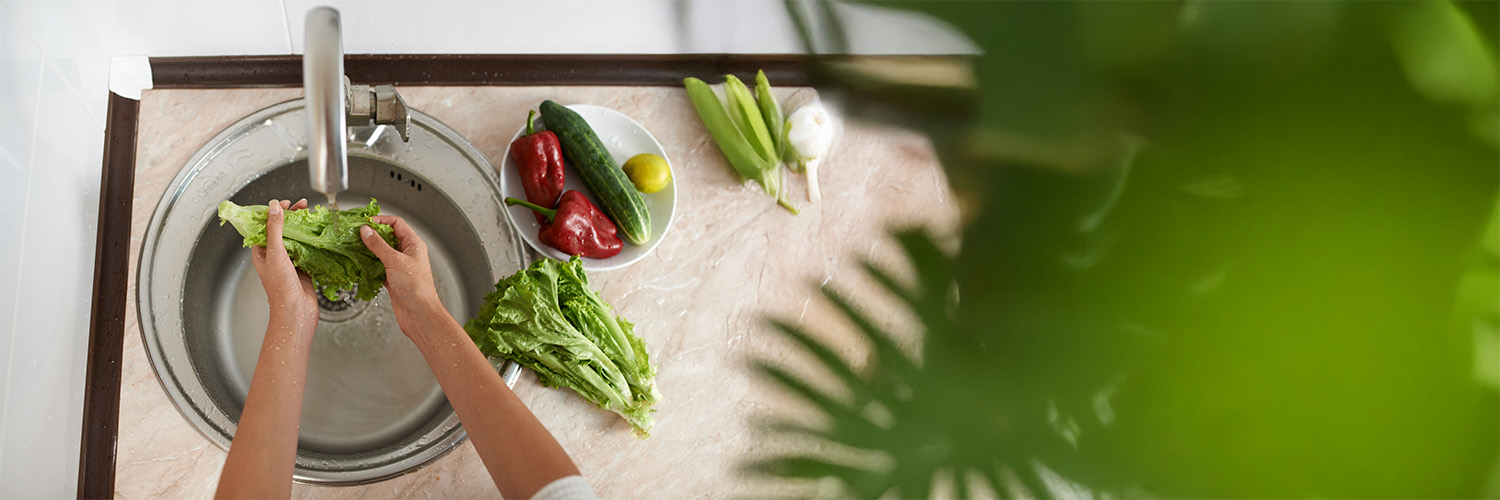
Running water combined with gentle rubbing physically removes many bacteria attached to the surface of fruits and vegetables. Scrubbing firm produce such as cucumbers, melons, potatoes, and apples with a clean produce brush improves removal.
Parasites
Cyclospora presents a unique challenge. According to the FDA, rinsing or washing contaminated produce is not likely to completely remove Cyclospora, because the parasite adheres tightly to produce surfaces. Likewise, chlorine-based sanitizers commonly used in food processing have limited effectiveness against Cyclospora.
Internal Contamination
If bacteria have entered damaged tissue or contamination occurred inside frozen fruit before packaging, washing cannot eliminate the pathogen.
The Best Evidence-Based Methods for Washing Produce
Current research supports the following approach:
- Running Water (Strongest Evidence) The FDA and USDA recommend washing all fresh produce under cool running water immediately before eating or preparing it.
Benefits:
∙Removes dirt
∙Reduces bacterial contamination
∙Removes some pesticide residues
∙Requires no additional products - Gentle Rubbing
Simply rubbing fruits and vegetables under running water significantly improves removal of microorganisms compared with rinsing alone. - Produce Brush
Firm produce such as potatoes, carrots, melons, cucumbers, and apples benefit from brushing
under running water. - Dry with a Clean Towel
Drying removes additional microorganisms loosened during washing.
Other Common Methods Used for Cleaning Produce
Baking Soda Soak
A baking soda solution has been shown in laboratory studies to remove certain surface pesticide residues more effectively than water alone. It is not considered a reliable disinfectant for foodborne pathogens but may reduce some pesticide exposure.
Commercial Produce Washes
Commercial fruit and vegetable washes typically contain surfactants, mild acids, or plant-derived ingredients designed to loosen dirt and wax. Independent studies generally conclude that:
∙Most commercial washes perform similarly to running water.
∙Few demonstrate substantially greater bacterial reduction.
∙Evidence for superior pesticide removal is inconsistent.
∙The FDA and USDA do not recommend commercial produce washes over plain running water.
OH-Ion and Electrolysis Produce Cleaners
A growing number of countertop devices—including products marketed as OH-ion, hydroxyl ion, electrolyzed water, or active oxygen cleaners—use electrolysis to generate reactive oxygen species in water.
How They Work
These devices pass a small electrical current through water, generating compounds such as:
∙Reactive oxygen species
∙Small amounts of hydrogen peroxide
∙Dissolved oxygen
∙In some designs, trace ozone
These oxidants may damage bacterial cell membranes and degrade certain pesticide molecules.
Research on commercial electrolyzed water systems used by the food industry demonstratesmeaningful reductions in bacterial contamination under controlled conditions. However, evidence for consumer-sized electrolysis devices is considerably weaker.
Few independent peer-reviewed studies evaluate individual consumer products. There is also little evidence that one brand consistently outperforms another. When a manufacturer claims “99% pesticide removal”, they often rely on proprietary laboratory testing that is not publicly available.
At present, electrolysis devices should be viewed as adjuncts rather than replacements for careful washing under running water.
Ozone Produce Cleaners
Ozone is a powerful oxidizing agent capable of inactivating many bacteria and viruses. It can be effective against numerous microorganisms and is used commercially in some sectors of the food industry.
Limitations:
∙Effectiveness depends on concentration and exposure time.
∙Consumer devices generate widely varying ozone levels.
∙Excess ozone gas may irritate the lungs if used improperly.
∙Evidence for superior household performance remains limited.
Ultrasonic Produce Cleaners
Ultrasonic cleaners generate microscopic cavitation bubbles that loosen debris from produce surfaces.
Research suggests they may:
∙Improve removal of soil
∙Help dislodge microorganisms when combined with water
∙Enhance cleaning when paired with ozone or electrolyzed water
However, ultrasonic cleaning alone has not consistently demonstrated superior microbial reduction compared with careful manual washing.
Practical Recommendations for Consumers
Consumers can substantially reduce their risk of foodborne illness by following these evidence- based practices:
∙Wash hands with soap and water before handling produce.
∙Rinse all fruits and vegetables under cool running water.
∙Rub produce gently during washing.
∙Use a clean produce brush for firm fruits and vegetables.
∙Remove damaged or bruised portions.
∙Dry produce with a clean towel or paper towel.
∙Refrigerate cut produce promptly.
∙Avoid cross-contamination by using clean cutting boards and utensils.
∙Never rely solely on produce washes or electronic cleaning devices.
∙Cooking can also help eliminate parasites and bacteria on produce.
∙Avoid undercooked meats which can harbor parasites and infectious microbes.
∙Follow FDA and CDC recall notices immediately. If a product is recalled due to
contamination, discard it rather than attempting to wash it.
What the Evidence Supports
Recent outbreaks involving Cyclospora and E. coli illustrate that no produce-cleaning method can eliminate every food safety risk. Most contamination occurs before produce reaches consumers, making prevention throughout the food supply chain essential.
For consumers, the most effective and evidence-supported strategy remains surprisingly simple: wash produce thoroughly under running water while gently rubbing or brushing the surface, maintain good kitchen hygiene, and stay informed about recalls. The FDA is currently recommending that people cook leafy greens and other produce sources that have been identified
as risky. Commercial produce washes and newer technologies such as electrolysis, ozone, and ultrasonic cleaners may offer incremental benefits under certain circumstances, but current evidence does not demonstrate that they consistently outperform careful conventional washing.
References
1.U.S. Food and Drug Administration. Investigations of Foodborne Illness Outbreaks.
https://www.fda.gov/food/outbreaks-foodborne-illness/investigations-foodborne-illness-
outbreaks
2.U.S. Food and Drug Administration. Outbreak Investigation of E. coli: Frozen
Blueberries (July 2026). https://www.fda.gov/food/outbreaks-foodborne-illness/outbreak-
investigation-e-coli-frozen-blueberries-july-2026
3.U.S. Food and Drug Administration. Cyclospora. https://www.fda.gov/food/foodborne-
pathogens/cyclospora
4.U.S. Food and Drug Administration. Cyclosporiasis and Fresh Produce.
https://www.fda.gov/food/foodborne-pathogens/cyclosporiasis-and-fresh-produce
5.U.S. Food and Drug Administration. Cyclospora Prevention, Response and Research
Action Plan. https://www.fda.gov/food/foodborne-pathogens/cyclospora-prevention-
response-and-research-action-plan
6.U.S. Department of Agriculture. Safe Handling of Fruits and Vegetables.
7.Centers for Disease Control and Prevention. Food Safety and Foodborne Illness.
8.Yang T, et al. Effectiveness of electrolyzed water in food sanitation: a systematic review.
Food Control.
9.Yang T, et al. Electrolyzed water applications in fresh produce sanitation. Comprehensive
Reviews in Food Science and Food Safety.
10.Yang T, et al. Effectiveness of ozone and ultrasonic technologies for produce sanitation.
Journal of Food Protection